Objective To explore the association among dietary behaviors, sleep quality, and prenatal depression during pregnancy, as well as the mediating effect of sleep quality between dietary behaviors and prenatal depression. Methods A total of 371 pregnant women who underwent outpatient examinations at a tertiary general hospital and a maternal and child health specialist hospital in Taiyuan City, Shanxi Province, from March 2024 to August 2024 were selected as study subjects. Questionnaires including the Pregnancy Dietary Behavior Scale, the Pittsburgh Sleep Quality Index (PSQI), and the Patient Health Questionnaire-9 (PHQ-9) were administered. SPSS 26.0 software was used for descriptive analysis, t-tests, one-way ANOVA, and Pearson correlation analysis. Results The overall dietary behaviors of pregnant women in Taiyuan City were poor, their sleep quality was acceptable, and they experienced mild depression, with specific scores of (86.13±12.44), (6.84±3.02), and (4.63±4.54), respectively. Correlation analysis revealed that the total score and all dimension scores of the dietary behavior scale during pregnancy were positively correlated with the total score of prenatal depression (P<0.01). Sleep quality played a mediating role between dietary behaviors during pregnancy and prenatal depression, with an effect value of 0.178, accounting for 22.82% of the total effect. Conclusion Dietary behaviors during pregnancy, sleep quality, and prenatal depression are interrelated. Sleep quality mediates the relationship between dietary behaviors and prenatal depression. Improving dietary behaviors and sleep quality during pregnancy can help reduce the risk of prenatal depression and promote maternal and infant health.
This is an Open Access article, distributed under the terms of the Creative Commons Attribution 4.0 International License (http://creativecommons.org/licenses/by/4.0/), which permits unrestricted use, distribution and reproduction in any medium or format, provided the original work is properly cited.
Dietary Behaviors During Pregnancy, Sleep Quality, Prenatal Depression, Mediating Effect
1. Introduction
In the female life cycle, pregnancy is a critical stage characterized by significant physiological, psychological, and social changes. The health status during this period not only affects the well-being of the pregnant woman herself but also profoundly influences fetal development and long-term health outcomes. Antenatal depression, a common psychological issue during pregnancy, has become a major public health concern. It not only impairs maternal mood and quality of life but may also have long-term adverse effects on the fetal nervous system development, postnatal behavior, and the mother-child relationship. Among the various factors affecting maternal mental health, dietary behavior and sleep quality are particularly important. Unhealthy eating habits (such as nutritional imbalance, binge eating, or excessive dieting) may lead to malnutrition or abnormal weight changes
[1]
李伊雨. 产妇内化体重污名、进食行为和负性心理状态的相关性研究 [D]. 中南大学, 2022. [Li Yiyu. A Study on the Correlation between Internalized Weight Stigma, Eating Behavior, and Negative Psychological States in Postpartum Women [D]. Central South University, 2022.]
[1]
, and may increase the risk of antenatal depression by affecting the synthesis and metabolism of neurotransmitters
[2]
González-Cantú A, Mireles-Zavala L, Rodríguez-Romo A, et al. Eating behaviors and emotional distress are predicted by treatment and adverse outcome in patients with type 2 diabetes. Psychol Health Med. 2018 Mar; 23(3): 325-336.
. Meanwhile, due to increased physical burden and hormonal changes during pregnancy, sleep quality often declines. Chronic sleep deprivation or poor sleep quality may raise the risk of antenatal depression by disrupting the neuroendocrine system
[3]
邹丽, 谭乐, 马玉巧, 等. 武汉市孕中期妇女抑郁发生情况及影响因素研究 [J]. 华中科技大学学报(医学版), 2024, 53(06): 825-832. [Zou Li, Tan Le, Ma Yuqiao, et al. Study on the Incidence and Influencing Factors of Depression among Women in Early and Mid-Pregnancy in Wuhan [J]. Journal of Huazhong University of Science and Technology (Medical Edition), 2024, 53(06): 825-832.].
. This paper analyzes the effects of dietary behavior and sleep quality on antenatal depression based on data, aiming to identify potential risk and protective factors, and to provide a reference for research and practice in the field of maternal mental health.
2. Subjects and Methods
2.1. Study Subjects
Using the convenience sampling method, pregnant women who needed prenatal check-ups were selected from the obstetrics outpatient departments of one tertiary general hospital and one specialized hospital in Taiyuan City from March to August 2024. Those who met the inclusion criteria were selected as study subjects.
Inclusion criteria:
1) At least 20 years old;
2) Have basic reading and comprehension skills;
3) Voluntarily participate in this study and sign an informed consent form.
Exclusion criteria:
1) Those who withdrew from the study due to interruption of the survey for examination;
2) Those with severe cognitive impairment. This study was approved by the Ethics Committee of Shanxi Medical University (2024024).
2.2. Research Methods
General Information Questionnaire. Designed by the researchers, the age, gestational age, pregnancy history, education level, place of residence, family income status, pre-pregnancy weight, current weight, height, smoking history, alcohol consumption history, family history of depression, and patient's own history of depression. Pregnancy Dietary Behavior Scale
[4]
黄艳平, 朱彤宇, 袁静, 等. 孕期饮食行为量表的编制与评价 [J]. 中国计划生育和妇产科, 2023, 15(10): 94-98. [Huang Yanping, Zhu Tongyu, Yuan Jing, et al. Development and Evaluation of a Dietary Behavior Scale during Pregnancy [J]. Chinese Journal of Family Planning and Gynecology, 2023, 15(10): 94-98.]
[4]
. Developed by Huang Yanping in 2023, it has 31 items and 6 dimensions: nutritional factors, dietary content, emotional factors, food appearance, weight factors, and special dietary factors. Pittsburgh Sleep Quality Index (PSQI)
[5]
Zhong QY, Gelaye B, Sánchez SE, et al. Psychometric Properties of the Pittsburgh Sleep Quality Index (PSQI) in a Cohort of Peruvian Pregnant Women. J Clin Sleep Med. 2015 Aug 15; 11(8): 869-77.
. This is a widely used sleep quality assessment tool for measuring sleep quality and sleep disorders over the past month. Patient Health Questionnaire-9 (PHQ-9)
[6]
Costantini L, Pasquarella C, Odone A, et al. Screening for depression in primary care with Patient Health Questionnaire-9 (PHQ-9): A systematic review. J Affect Disord. 2021 Jan 15; 279: 473-483.
. This is a self-rating scale assessing the frequency of depressive symptoms over the past two weeks.
2.3. Survey Methods
During the survey process, professionals distributed the questionnaires and explained the purpose, methods, and significance of this study during the questionnaire process. It was confirmed that the study subjects voluntarily agreed to participate in this survey. After the subjects agreed, they signed informed consent forms according to ethical requirements. After completing the questionnaires, they were collected and numbered. The electronic questionnaire system aggregated the data, while paper questionnaires were double-entered into Excel spreadsheets and carefully verified. A total of 400 questionnaires were distributed in this study. After excluding 29 invalid questionnaires, 371 valid responses were finally obtained, with an effective response rate of 92.75%.
2.4. Statistical Analysis
SPSS 26.0 statistical software was used for data analysis. Measurement data were expressed as mean ± standard deviation (x±s). Independent sample t-tests were used for comparisons between two groups, and analysis of variance (ANOVA) was used for comparisons among multiple groups. Count data were expressed as rates (%). Correlation analysis was performed using bivariate Pearson correlation. P < 0.05 was considered statistically significant, accepting the hypothesis of association between the variables.
3. Results
3.1. General Information of Pregnant Women
A total of 371 pregnant women were included in this study, with an average age of 30.5 years. There were 220 primiparas (59.3%) and 151 multiparas (40.7%); 27 in the first trimester (7.3%), 127 in the second trimester (34.2%), and 217 in the third trimester (58.5%); 69 were pre-pregnancy overweight (18.6%), and 28 were pre-pregnancy obese (7.5%); 171 had excessive gestational weight gain (46.1%); regarding education level, the largest group was those with associate or bachelor's degrees, 258 cases (69.5%); the number of people living in cities far exceeded those living in rural areas; the number of people with a monthly per capita household income of 3000-5000 yuan was similar to those with an income >5000 yuan; few had a smoking or alcohol consumption history; 7 had a family history of depression (1.9%), and 13 had a personal history of depression (3.5%); 159 had prenatal depression, with a depression detection rate of 42.9%.
3.2. Scores of Dietary Behaviors, Sleep Quality, and Prenatal Depression
The total score for dietary behaviors among pregnant women attending outpatient clinics at a tertiary general hospital and a maternal and child health specialist hospital in Taiyuan City was (86.13±12.44). The scores for the six dimensions, from highest to lowest, were weight factors, emotional factors, special dietary factors, food appearance, nutritional factors, and dietary content, indicating overall poor dietary behaviors. The total sleep quality score was (6.84±3.02), indicating acceptable overall sleep quality. The total score for prenatal depression was (4.63±4.54), indicating an overall mild level of depression. (See Table 1)
Table 1. Scores of Dietary Behaviors, Sleep Quality, and Prenatal Depression (n=371).
Variable
Number of Items
Score Range
Score (Mean ± SD)
Dietary Behaviors
31
31-155
86.13±12.44
Nutritional Factors
5
5-25
11.70±3.65
Dietary Content
4
4-20
10.84±3.49
Emotional Factors
5
5-25
16.28±1.94
Food Appearance
5
5-25
13.24±4.53
Weight Factors
6
6-30
18.02±3.61
Special Dietary Factors
6
6-30
16.07±3.88
Sleep Quality
7
0-21
6.84±3.02
Prenatal Depression
9
0-27
4.63±4.54
3.3. Differences in Scores of Dietary Behaviors, Sleep Quality, and Prenatal Depression
Differences in dietary behavior scores based on gestational weight gain, education level, alcohol history, and family history of depression were statistically significant (P<0.05). Differences in sleep quality scores based on trimester, pre-pregnancy BMI, smoking history, alcohol history, and personal history of depression were statistically significant (P<0.05). Differences in depression scores based on trimester, smoking history, alcohol history, and personal history of depression were statistically significant (P<0.05). (See Table 2)
Table 2. Differences in Scores of Dietary Behaviors, Sleep Quality, and Prenatal Depression (n=371).
Variable
n (%)
Dietary Behaviors
Sleep Quality
Prenatal Depression
Age
≤30
200 (53.9)
86.45±13.12
6.73±3.10
4.64±4.64
>30
171 (46.1)
85.79±11.61
6.96±2.95
4.61±4.43
t
0.506
-0.761
0.055
P
>0.05
>0.05
>0.05
Parity
Primipara
220 (59.3)
86.63±11.85
6.82±3.03
4.63±4.37
Multipara
151 (40.7)
85.44±13.26
6.86±3.02
4.62±4.83
t
0.905
-0.134
0.19
P
>0.05
>0.05
>0.05
Trimester
First
27 (7.3)
90.52±12.74
6.19±2.41
5.89±5.01
Second
127 (34.2)
86.22±12.36
6.52±2.46
4.42±3.94
Third
217 (58.5)
85.55±12.40
7.10±3.35
4.59±4.80
F
1.927
2.270
2.286
P
>0.05
<0.05
<0.05
Pre-pregnancy BMI
Underweight
41 (11.1)
87.54±11.63
7.54±3.49
5.27±4.88
Normal
233 (62.8)
85.88±12.62
6.48±2.80
4.50±4.32
Overweight
69 (18.6)
86.32±12.81
7.46±3.02
4.71±4.78
Obese
28 (7.5)
85.89±11.58
7.18±3.74
4.54±5.30
F
0.215
2.937
0.341
P
>0.05
<0.05
>0.05
Gestational Weight Gain
Normal
173 (46.6)
85.43±12.70
6.83±3.07
4.77±4.42
Insufficient
27 (7.3)
82.63±13.50
5.85±2.70
3.41±3.54
Excessive
171 (46.1)
87.42±11.90
7.00±3.01
4.67±4.78
F
2.269
1.689
1.075
P
<0.05
>0.05
>0.05
Education Level
Primary school or below
2 (0.5)
76.00±4.24
11.00±1.41
4.50±4.95
Junior high school
9 (2.4)
80.22±17.68
6.44±3.20
4.00±4.39
High school/Vocational
21 (5.7)
81.76±14.44
6.62±2.43
4.76±4.30
Associate/Bachelor's
258 (69.5)
86.61±11.83
6.91±3.01
4.86±4.77
Graduate or above
81 (21.8)
86.69±13.01
6.60±3.16
3.91±3.84
F
2.636
1.169
0.723
P
<0.05
>0.05
>0.05
Residence
Rural
45 (12.1)
86.29±13.36
6.62±3.57
4.51±4.54
Urban
326 (87.9)
86.12±12.33
6.87±2.95
4.64±4.55
t
0.084
-0.504
-0.184
P
>0.05
>0.05
>0.05
Monthly Per Capita Income
<3000
28 (7.5)
83.54±14.62
7.11±2.87
5.82±4.35
3000-5000
170 (45.8)
86.05±12.33
6.51±2.81
4.12±4.18
>5000
173 (46.6)
86.65±12.19
7.11±3.23
4.94±4.86
F
0.764
1.807
2.462
P
>0.05
>0.05
>0.05
Smoking History
No
363 (97.8)
85.99±12.43
6.77±2.98
4.53±4.49
Yes
8 (2.2)
92.88±11.28
10.00±3.70
9.25±4.87
t
-1.551
-3.025
-2.942
P
>0.05
<0.01
<0.01
Alcohol History
No
340 (91.6)
85.53±12.43
6.67±2.98
4.45±4.39
Yes
31 (8.4)
92.84±10.51
8.61±2.99
6.61±5.67
t
-3.169
-3.469
-2.563
P
<0.01
<0.01
<0.05
Family History of Depression
No
364 (98.1)
85.94±12.40
6.82±3.02
4.61±4.54
Yes
7 (1.9)
96.57±9.98
7.86±2.91
5.57±4.58
t
-2.252
-0.902
-0.555
P
<0.05
>0.05
>0.05
Personal History of Depression
No
358 (96.5)
86.00±12.20
6.75±2.95
4.53±4.50
Yes
13 (3.5)
90.08±17.81
9.08±4.13
7.46±4.68
t
-1.162
-2.745
-2.305
P
>0.05
<0.01
<0.05
3.4. Correlation Analysis of Dietary Behaviors, Sleep Quality, and Prenatal Depression Scores
The results showed that the total scores for dietary behaviors and sleep quality were positively correlated with the total score for prenatal depression among women attending outpatient clinics at a tertiary general hospital and a maternal and child health specialist hospital in Taiyuan City (r=0.225, 0.519, bothP < 0.01). (See Table 3)
Table 3. Correlation Analysis of Scores for Dietary Behaviors, Sleep Quality, and Prenatal Depression (n=371).
Variable
Total Dietary Behaviors Score
Total Sleep Quality Score
Total Prenatal Depression Score
Total Dietary Behaviors Score
1
Total Sleep Quality Score
0.498**
1
Total Prenatal Depression Score
0.225**
0.519**
1
Note: P < 0.05, *P < 0.01
3.5. Mediating Effect Analysis of Dietary Behaviors, Sleep Quality, and Prenatal Depression
Based on the theory of planned behavior, with dietary behaviors during pregnancy as the independent variable (X), sleep quality as the mediating variable (M), and prenatal depression as the dependent variable (Y), the SPSS macro PROCESS was used. The bias-corrected percentile Bootstrap method was employed, selecting model 4 and resampling 5000 times, to test the mediating effect of sleep quality between dietary behaviors during pregnancy and prenatal depression. The upper and lower limits of the 95% confidence intervals for the direct effect of dietary behaviors during pregnancy on prenatal depression and the mediating effect of sleep quality did not include 0. (See Table 4)
Table 4. Mediating Effect Analysis of Dietary Behaviors, Sleep Quality, and Prenatal Depression.
Effect
Effect (B)
BootSE
BootLLCI
BootULCI
Proportion of Relative Effect (%)
Total Effect
0.780
0.069
0.908
0.643
Direct Effect
0.602
0.069
0.848
0.623
77.18%
Indirect Effect
0.178
0.015
0.004
0.054
22.82%
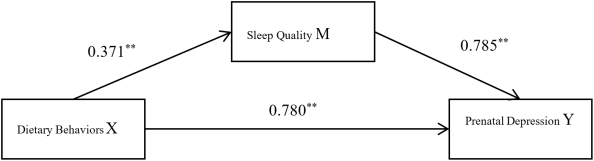
It was concluded that dietary behaviors during pregnancy have a direct predictive effect on prenatal depression and can also predict prenatal depression through the mediating effect of sleep quality. The direct effect was 0.602, and the mediating effect was 0.178. The mediating effect of sleep quality between dietary behaviors during pregnancy and prenatal depression accounted for 22.82% of the total effect. The variable relationships are shown in Figure 1.
Figure 1. Mediating Effect Model of Sleep Quality between Dietary Behaviors and Prenatal Depression.
4. Discussion
4.1. Status and Influencing Factors of Dietary Behaviors, Sleep Quality, and Prenatal Depression
The results of this study show that the total score for dietary behaviors among pregnant women was (86.14±12.44), indicating overall poor dietary behaviors. Among the dimensions, emotional factors scored the highest, suggesting that most pregnant women exhibit characteristics of emotional eating. Research shows that when pregnant women experience stress or anxiety, such as having a family history of depression, they tend to choose high-sugar, high-fat foods, leading to unhealthy dietary patterns
[7]
Hirschberg AL. Sex hormones, appetite and eating behaviour in women. Maturitas. 2012 Mar; 71(3): 248-56.
. The next highest was weight factors. Most pregnant women choose not to eat after dinner to control their weight, indicating that the degree of gestational weight gain does cause a psychological burden on pregnant women. It is necessary to disseminate relevant knowledge to improve pregnant women's attitudes towards the degree of gestational weight gain and modify their dietary behaviors of dieting or overeating based on their daily eating habits. Nutritional factors scored the lowest. A study on the nutrition of 600 pregnant women showed that the education level of pregnant women was positively correlated with nutritional knowledge, attitudes, and behaviors
[8]
虞智芝. 孕期营养状况与妊娠结局的相关性研究 [J]. 中国妇幼保健, 2011, 26(31): 4831-4832.[Yu Zhizhi. A Study on the Correlation between Nutritional Status during Pregnancy and Pregnancy Outcomes [J]. Maternal and Child Health Care of China, 2011, 26(31): 4831-4832.]
[8]
. The results of this study show that the sleep quality score of pregnant women was (6.84±3.02), indicating acceptable overall sleep quality. Factors affecting sleep quality in this study included trimester, pre-pregnancy BMI, smoking history, alcohol consumption history, and personal history of depression. The sleep quality score in the third trimester (7.10±3.35) was higher than that in the first (6.19±2.41) and second (6.52±2.46) trimesters, with significance (P< 0.05). As pregnancy progresses, the sleep quality of pregnant women significantly decreases in the late stage, reflecting that sleep problems are more severe in the third trimester. A longitudinal study also reached the same conclusion, with sleep quality decreasing by 1.68 points from the second trimester (M=5.31) to the third trimester (M=7.03)
[9]
Sedov ID, Cameron EE, Madigan S, et al. Sleep quality during pregnancy: A meta-analysis. Sleep Med Rev. 2018 Apr; 38: 168-176.
. Pre-pregnancy BMI is closely related to sleep quality during pregnancy. Studies have found that overweight or obese pregnant women typically score lower on sleep quality assessments, which may be related to the physical burden, respiratory problems, and physical discomfort caused by excessive weight, factors that are exacerbated during pregnancy, thereby affecting the overall sleep experience
[10]
Fu T, Wang C, Yan J, et al. Relationship between antenatal sleep quality and depression in perinatal women: A comprehensive meta-analysis of observational studies. J Affect Disord. 2023 Apr 14; 327: 38-45.
. A personal history of depression may affect psychological changes during pregnancy. The physiological and psychological changes during pregnancy make pregnant women more prone to sleep disorders. Physiological factors, endocrine factors, and psychosocial factors all affect sleep
[3]
邹丽, 谭乐, 马玉巧, 等. 武汉市孕中期妇女抑郁发生情况及影响因素研究 [J]. 华中科技大学学报(医学版), 2024, 53(06): 825-832. [Zou Li, Tan Le, Ma Yuqiao, et al. Study on the Incidence and Influencing Factors of Depression among Women in Early and Mid-Pregnancy in Wuhan [J]. Journal of Huazhong University of Science and Technology (Medical Edition), 2024, 53(06): 825-832.].
. The results of this study show that the score on the self-rated depression scale for pregnant women was (4.63±4.54), proving that the pregnant women population is at a mild level of depression. The trimester of pregnancy is associated with an increased risk of prenatal depression. According to the 10th edition of Obstetrics and Gynecology, the gestational period is divided into three trimesters. It was found that the detection rate of depression in the first trimester (58.6%) was higher than that in the second and third trimesters (44.3%, 42.3%). A survey of 649 women in an urban area of South Africa found that the prevalence of thoughts of self-harm in early pregnancy (12.5%) was slightly higher than in late pregnancy (11.6%)
[12]
Redinger S, Pearson RM, Houle B, et al. Thoughts of self-harm in early and late pregnancy in urban South Africa: Investigating prevalence, predictors and screening options. S Afr Med J. 2021 Jun 30; 111(7): 627-634.
. This is related to the impact of facing pregnancy reactions and adapting to the psychological pressure of pregnancy in the first trimester. Pregnant women with a smoking history, alcohol consumption history, or personal history of depression have higher levels of depression. Unhealthy lifestyle habits can cause pregnant women to feel anxious and guilty or face more social criticism and pressure
[13]
Rubio DM, Kraemer KL, Farrell MH, et al. Factors associated with alcohol use, depression, and their co-occurrence during pregnancy. Alcohol Clin Exp Res. 2008 Sep; 32(9): 1543-51.
. This psychological pressure further exacerbates depressive moods and may also increase the risk of depression through physiological mechanisms, such as affecting the balance of neurotransmitters (e.g., dopamine, serotonin). Zeng Guoying believes that the emotional state of pregnant women, pre-pregnancy mental health history, and stressful events during pregnancy are all important predictors of prenatal depression
[14]
曾国英, 陈艳琛, 兰岚. 孕妇心理健康状况及影响因素分析 [J]. 中国妇幼保健, 2022, 37(17): 3222-3226. [Zeng Guoying, Chen Yanzhu, Lan Lan. Analysis of Mental Health Status and Influencing Factors in Pregnant Women [J]. Maternal and Child Health Care of China, 2022, 37(17): 3222-3226.].
4.2. Correlation Analysis of Dietary Behaviors, Sleep Quality, and Prenatal Depression Among Pregnant Women in Taiyuan City
The results of this study show that the total scores for dietary behaviors, sleep quality, and prenatal depression are positively correlated. Regarding the influence of diet on sleep, studies have shown that a high-fat diet may be related to changes in CR and sleep quality. A logistic regression model showed that people with a higher cholesterol/saturated fat index (CSI) unit had a 1.6% increased probability of experiencing sleep problems
[15]
Rasaei N, Samadi M, Khadem A, et al. The association between cholesterol/saturated fat index (CSI) and quality of sleep, and circadian rhythm among overweight and obese women: a cross-sectional study. J Health Popul Nutr. 2023 Jul 27; 42(1): 75.
. Regarding the influence of sleep on diet, studies have shown that staying up late, especially eating before bed, may increase an individual's total calorie intake and weight. Carbohydrates and protein consumed after 8 pm or within 4 hours before bed are associated with higher total calories
[16]
Baron KG, Reid KJ, Horn LV, et al. Contribution of evening macronutrient intake to total caloric intake and body mass index. Appetite. 2013 Jan; 60(1): 246-251.
霍伟, 韩蓓. 高中生饮食行为与抑郁的相关性研究 [J]. 延安大学学报(医学科学版), 2024, 22(02): 80-86.[Huo Wei, Han Bei. A Study on the Correlation between Dietary Behaviors and Depression in High School Students [J]. Journal of Yan'an University (Medical Science Edition), 2024, 22(02): 80-86.].
include skipping breakfast or poor breakfast quality, irregular meals, picky eating, snacking, beverage intake, inflammatory diets, not paying attention to food expiration dates, etc. Physiologically, these behaviors increase the risk of depression
[18]
顾文馨, 谭银亮, 陆唯怡, 等. 上海市青少年饮食行为现状以及抑郁焦虑情绪的影响 [J]. 中国学校卫生, 2022, 43(06): 864-868. [Gu Wenxin, Tan Yinliang, Lu Weiyi, et al. Current Status of Dietary Behaviors and the Impact of Depression and Anxiety among Adolescents in Shanghai [J]. Chinese Journal of School Health, 2022, 43(06): 864-868.].
. International research suggests that emotional eating is a coping strategy, but its long-term effectiveness is poor. For example, emotional eating may worsen depressive symptoms in pregnant women, forming a vicious cycle
[19]
Dakanalis A, Mentzelou M, Papadopoulou SK, et al. The Association of Emotional Eating with Overweight/Obesity, Depression, Anxiety/Stress, and Dietary Patterns: A Review of the Current Clinical Evidence. Nutrients. 2023 Feb 26; 15(5): 1173.
. Most studies still emphasize the importance of dietary nutrition interventions during pregnancy. However, in past studies, most anticipated nutritional interventions involved dietitians preparing fixed meals, regular dietary follow-ups, or nutritional supplements. Few studies have focused on the motivation and changes in pregnant women's own dietary behaviors. In practice, monitoring and cultivating healthy dietary behaviors are equally as important as nutritional intervention strategies during pregnancy. A cross-sectional study found that the prevalence of poor sleep quality and prenatal depression among 898 pregnant women was 44.3% and 24.4%, respectively
[20]
鲁青芳, 于秀丽, 曹攀攀, 等. 不同胎次孕妇产前抑郁发生率及影响因素 [J]. 神经疾病与精神卫生, 2021, 21(07): 499-503. [Lu Qingfang, Yu Xiuli, Cao Cuicui, et al. Incidence and Influencing Factors of Prenatal Depression in Pregnant Women of Different Parities [J]. Nervous Diseases and Mental Health, 2021, 21(07): 499-503.]
[20]
. Research has found that sleep disorders in the third trimester are also important factors predicting depression 2-4 weeks postpartum. About 82.76% of pregnant women with prenatal depression could develop postpartum depression (PPD), suggesting that prenatal depression increases the risk of PPD
[21]
田燕燕, 拓明花, 马若梅, 等. 妊娠晚期孕妇抑郁与睡眠质量的相关性研究 [J]. 中华疾病控制杂志, 2018, 22(06): 630-634.[Tian Yanyan, Tuo Minghua, Ma Ruomei, et al. A Study on the Correlation between Depression and Sleep Quality in Third-Trimester Pregnant Women [J]. Chinese Journal of Disease Control & Prevention, 2018, 22(06): 630-634.] .
. An in-depth understanding of the current status of sleep quality during pregnancy and identifying the multiple factors affecting sleep quality is crucial for effectively preventing poor sleep and prenatal depression during pregnancy. This understanding not only helps improve the overall health level of pregnant women but also provides an important basis for formulating targeted pregnancy health care strategies.
4.3. Mediating Effect of Sleep Quality between Dietary Behaviors and Prenatal Depression
This study found that sleep quality plays a partial mediating role between dietary behaviors and prenatal depression. Dietary behaviors during pregnancy not only directly predict prenatal depression (direct effect of 0.602) but also indirectly affect prenatal depression by influencing sleep quality (mediating effect of 0.178). Path 1: Unhealthy dietary behaviors can lead to decreased sleep quality, thereby increasing the risk of prenatal depression. For example, high dietary intake of sugar, fat, and low fiber may be associated with decreased sleep quality
[22]
Zhong L, Han X, Li M, et al. Modifiable dietary factors in adolescent sleep: A systematic review and meta-analysis. Sleep Med. 2024 Mar; 115: 100-108.
. A survey found that the incidence of depression in pregnant women with sleep disorders was 31.1% higher than in those without sleep disorders
[23]
Gao M, Hu J, Yang L, et al. Association of sleep quality during pregnancy with stress and depression: a prospective birth cohort study in China. BMC Pregnancy Childbirth. 2019 Nov 27; 19(1): 444.
. Path 2: Healthy dietary behaviors can improve sleep quality, thereby reducing the risk of prenatal depression. For example, a diet rich in fruits, vegetables, and olive oil, such as the Mediterranean diet, can help improve sleep quality during pregnancy
[24]
Wilson K, St-Onge MP, Tasali E. Diet Composition and Objectively Assessed Sleep Quality: A Narrative Review. J Acad Nutr Diet. 2022 Jun; 122(6): 1182-1195.
and further improve depressive moods. Multiple regression analyses indicate that developing an overall strategy to promote healthy eating, starting from motivation, can alleviate the combined effects of depression and anxiety on the human body
[25]
Flor-Alemany M, Nestares T, Alemany-Arrebola I, et al. Influence of Dietary Habits and Mediterranean Diet Adherence on Sleep Quality during Pregnancy. The GESTAFIT Project. Nutrients. 2020 Nov 20; 12(11): 3569.
. Dietary behaviors during pregnancy were positively correlated with sleep quality (r=0.106), indicating that sleep quality and dietary behaviors during pregnancy can influence each other. Sleep deprivation may lead pregnant women to choose high-calorie, high-sugar foods in their daily diet, thereby affecting their overall dietary quality and mood during pregnancy. Intervention measures should focus on both diet and sleep issues, helping pregnant women establish healthy lifestyle habits to break the vicious cycle of diet-sleep-depression.
5. Conclusion
In summary, pregnant women are generally at a mild level of depression. Prenatal depression is influenced by gestational week, smoking history, alcohol consumption history, and personal history of depression. Pregnant women with smoking and drinking habits should be advised to quit. The overall dietary behavior of pregnant women is poor, especially in the dimension of emotional factors. Pregnant women's education level, alcohol consumption history, and family history of depression are correlated with dietary behaviors during pregnancy. Improving the dietary behaviors of pregnant women requires comprehensive consideration of multiple factors such as emotional management, cultural background, and family health history. The sleep quality of pregnant women is generally acceptable, but sleep latency is long. Gestational week, pre-pregnancy BMI, smoking history, alcohol consumption history, and personal history of depression are correlated with sleep quality during pregnancy. For the problem of long sleep latency, interventions such as relaxation training, adjusting the sleep environment, or consulting a doctor can be attempted, and sleep quality can be improved by controlling pre-pregnancy BMI and avoiding smoking and alcohol consumption. Dietary behaviors and sleep quality during pregnancy are positively correlated, indicating that dietary behaviors during pregnancy are not only a guarantee of nutrient intake but also a promoting factor for good sleep. A balanced diet and regular eating are recommended. Dietary behaviors during pregnancy have a significant predictive effect on prenatal depression, indicating that dietary management during pregnancy should be one of the important intervention measures to prevent prenatal depression. Sleep quality plays a mediating role in this relationship and is a key link. The relationship among the three factors should be comprehensively considered, combining diet, sleep, and psychological support to provide comprehensive health guidance.
Abbreviations
BMI
Body Mass Index
CR
Cortisol
CSI
Cholesterol/Saturated Fat Index
PHQ-9
Patient Health Questionnaire-9
PPD
Postpartum Depression
PSQI
Pittsburgh Sleep Quality Index
Author Contributions
Yu-zhu Pang: Writing – original draft
Meng-qi Wang: Methodology
Jin Wang: Formal Analysis
Hao Feng: Data curation
Guo-dian Liang: Validation
Jingmin Cheng: Writing – review & editing
Funding
This work was supported by the Chinese Nutrition Society under the Rational Diet · Breakfast Nutrition Science Popularization Special Research Funding Project (Grant No.: CNS-RDSF-2026-020).
Conflicts of Interest
The authors declare no actual or potential conflicts of interest.
References
[1]
李伊雨. 产妇内化体重污名、进食行为和负性心理状态的相关性研究 [D]. 中南大学, 2022. [Li Yiyu. A Study on the Correlation between Internalized Weight Stigma, Eating Behavior, and Negative Psychological States in Postpartum Women [D]. Central South University, 2022.]
[2]
González-Cantú A, Mireles-Zavala L, Rodríguez-Romo A, et al. Eating behaviors and emotional distress are predicted by treatment and adverse outcome in patients with type 2 diabetes. Psychol Health Med. 2018 Mar; 23(3): 325-336.
邹丽, 谭乐, 马玉巧, 等. 武汉市孕中期妇女抑郁发生情况及影响因素研究 [J]. 华中科技大学学报(医学版), 2024, 53(06): 825-832. [Zou Li, Tan Le, Ma Yuqiao, et al. Study on the Incidence and Influencing Factors of Depression among Women in Early and Mid-Pregnancy in Wuhan [J]. Journal of Huazhong University of Science and Technology (Medical Edition), 2024, 53(06): 825-832.].
黄艳平, 朱彤宇, 袁静, 等. 孕期饮食行为量表的编制与评价 [J]. 中国计划生育和妇产科, 2023, 15(10): 94-98. [Huang Yanping, Zhu Tongyu, Yuan Jing, et al. Development and Evaluation of a Dietary Behavior Scale during Pregnancy [J]. Chinese Journal of Family Planning and Gynecology, 2023, 15(10): 94-98.]
[5]
Zhong QY, Gelaye B, Sánchez SE, et al. Psychometric Properties of the Pittsburgh Sleep Quality Index (PSQI) in a Cohort of Peruvian Pregnant Women. J Clin Sleep Med. 2015 Aug 15; 11(8): 869-77.
Costantini L, Pasquarella C, Odone A, et al. Screening for depression in primary care with Patient Health Questionnaire-9 (PHQ-9): A systematic review. J Affect Disord. 2021 Jan 15; 279: 473-483.
虞智芝. 孕期营养状况与妊娠结局的相关性研究 [J]. 中国妇幼保健, 2011, 26(31): 4831-4832.[Yu Zhizhi. A Study on the Correlation between Nutritional Status during Pregnancy and Pregnancy Outcomes [J]. Maternal and Child Health Care of China, 2011, 26(31): 4831-4832.]
[9]
Sedov ID, Cameron EE, Madigan S, et al. Sleep quality during pregnancy: A meta-analysis. Sleep Med Rev. 2018 Apr; 38: 168-176.
Fu T, Wang C, Yan J, et al. Relationship between antenatal sleep quality and depression in perinatal women: A comprehensive meta-analysis of observational studies. J Affect Disord. 2023 Apr 14; 327: 38-45.
Redinger S, Pearson RM, Houle B, et al. Thoughts of self-harm in early and late pregnancy in urban South Africa: Investigating prevalence, predictors and screening options. S Afr Med J. 2021 Jun 30; 111(7): 627-634.
曾国英, 陈艳琛, 兰岚. 孕妇心理健康状况及影响因素分析 [J]. 中国妇幼保健, 2022, 37(17): 3222-3226. [Zeng Guoying, Chen Yanzhu, Lan Lan. Analysis of Mental Health Status and Influencing Factors in Pregnant Women [J]. Maternal and Child Health Care of China, 2022, 37(17): 3222-3226.].
Rasaei N, Samadi M, Khadem A, et al. The association between cholesterol/saturated fat index (CSI) and quality of sleep, and circadian rhythm among overweight and obese women: a cross-sectional study. J Health Popul Nutr. 2023 Jul 27; 42(1): 75.
Baron KG, Reid KJ, Horn LV, et al. Contribution of evening macronutrient intake to total caloric intake and body mass index. Appetite. 2013 Jan; 60(1): 246-251.
霍伟, 韩蓓. 高中生饮食行为与抑郁的相关性研究 [J]. 延安大学学报(医学科学版), 2024, 22(02): 80-86.[Huo Wei, Han Bei. A Study on the Correlation between Dietary Behaviors and Depression in High School Students [J]. Journal of Yan'an University (Medical Science Edition), 2024, 22(02): 80-86.].
顾文馨, 谭银亮, 陆唯怡, 等. 上海市青少年饮食行为现状以及抑郁焦虑情绪的影响 [J]. 中国学校卫生, 2022, 43(06): 864-868. [Gu Wenxin, Tan Yinliang, Lu Weiyi, et al. Current Status of Dietary Behaviors and the Impact of Depression and Anxiety among Adolescents in Shanghai [J]. Chinese Journal of School Health, 2022, 43(06): 864-868.].
Dakanalis A, Mentzelou M, Papadopoulou SK, et al. The Association of Emotional Eating with Overweight/Obesity, Depression, Anxiety/Stress, and Dietary Patterns: A Review of the Current Clinical Evidence. Nutrients. 2023 Feb 26; 15(5): 1173.
鲁青芳, 于秀丽, 曹攀攀, 等. 不同胎次孕妇产前抑郁发生率及影响因素 [J]. 神经疾病与精神卫生, 2021, 21(07): 499-503. [Lu Qingfang, Yu Xiuli, Cao Cuicui, et al. Incidence and Influencing Factors of Prenatal Depression in Pregnant Women of Different Parities [J]. Nervous Diseases and Mental Health, 2021, 21(07): 499-503.]
[21]
田燕燕, 拓明花, 马若梅, 等. 妊娠晚期孕妇抑郁与睡眠质量的相关性研究 [J]. 中华疾病控制杂志, 2018, 22(06): 630-634.[Tian Yanyan, Tuo Minghua, Ma Ruomei, et al. A Study on the Correlation between Depression and Sleep Quality in Third-Trimester Pregnant Women [J]. Chinese Journal of Disease Control & Prevention, 2018, 22(06): 630-634.] .
Gao M, Hu J, Yang L, et al. Association of sleep quality during pregnancy with stress and depression: a prospective birth cohort study in China. BMC Pregnancy Childbirth. 2019 Nov 27; 19(1): 444.
Flor-Alemany M, Nestares T, Alemany-Arrebola I, et al. Influence of Dietary Habits and Mediterranean Diet Adherence on Sleep Quality during Pregnancy. The GESTAFIT Project. Nutrients. 2020 Nov 20; 12(11): 3569.
Pang, Y., Wang, M., Wang, J., Feng, H., Liang, G., et al. (2026). A Study on the Association Between Dietary Behaviors, Sleep Quality, and Prenatal Depression During Pregnancy. World Journal of Public Health, 11(3), 278-286. https://doi.org/10.11648/j.wjph.20261103.16
Pang, Y.; Wang, M.; Wang, J.; Feng, H.; Liang, G., et al. A Study on the Association Between Dietary Behaviors, Sleep Quality, and Prenatal Depression During Pregnancy. World J. Public Health2026, 11(3), 278-286. doi: 10.11648/j.wjph.20261103.16
Pang Y, Wang M, Wang J, Feng H, Liang G, et al. A Study on the Association Between Dietary Behaviors, Sleep Quality, and Prenatal Depression During Pregnancy. World J Public Health. 2026;11(3):278-286. doi: 10.11648/j.wjph.20261103.16
@article{10.11648/j.wjph.20261103.16,
  author = {Yu-zhu Pang and Meng-qi Wang and Jin Wang and Hao Feng and Guo-dian Liang and Jing-min Cheng},
  title = {A Study on the Association Between Dietary Behaviors, Sleep Quality, and Prenatal Depression During Pregnancy},
  journal = {World Journal of Public Health},
  volume = {11},
  number = {3},
  pages = {278-286},
  doi = {10.11648/j.wjph.20261103.16},
  url = {https://doi.org/10.11648/j.wjph.20261103.16},
  eprint = {https://article.sciencepublishinggroup.com/pdf/10.11648.j.wjph.20261103.16},
  abstract = {Objective To explore the association among dietary behaviors, sleep quality, and prenatal depression during pregnancy, as well as the mediating effect of sleep quality between dietary behaviors and prenatal depression. Methods A total of 371 pregnant women who underwent outpatient examinations at a tertiary general hospital and a maternal and child health specialist hospital in Taiyuan City, Shanxi Province, from March 2024 to August 2024 were selected as study subjects. Questionnaires including the Pregnancy Dietary Behavior Scale, the Pittsburgh Sleep Quality Index (PSQI), and the Patient Health Questionnaire-9 (PHQ-9) were administered. SPSS 26.0 software was used for descriptive analysis, t-tests, one-way ANOVA, and Pearson correlation analysis. Results The overall dietary behaviors of pregnant women in Taiyuan City were poor, their sleep quality was acceptable, and they experienced mild depression, with specific scores of (86.13±12.44), (6.84±3.02), and (4.63±4.54), respectively. Correlation analysis revealed that the total score and all dimension scores of the dietary behavior scale during pregnancy were positively correlated with the total score of prenatal depression (PConclusion Dietary behaviors during pregnancy, sleep quality, and prenatal depression are interrelated. Sleep quality mediates the relationship between dietary behaviors and prenatal depression. Improving dietary behaviors and sleep quality during pregnancy can help reduce the risk of prenatal depression and promote maternal and infant health.},
 year = {2026}
}
TY  - JOUR
T1  - A Study on the Association Between Dietary Behaviors, Sleep Quality, and Prenatal Depression During Pregnancy
AU  - Yu-zhu Pang
AU  - Meng-qi Wang
AU  - Jin Wang
AU  - Hao Feng
AU  - Guo-dian Liang
AU  - Jing-min Cheng
Y1  - 2026/08/13
PY  - 2026
N1  - https://doi.org/10.11648/j.wjph.20261103.16
DO  - 10.11648/j.wjph.20261103.16
T2  - World Journal of Public Health
JF  - World Journal of Public Health
JO  - World Journal of Public Health
SP  - 278
EP  - 286
PB  - Science Publishing Group
SN  - 2637-6059
UR  - https://doi.org/10.11648/j.wjph.20261103.16
AB  - Objective To explore the association among dietary behaviors, sleep quality, and prenatal depression during pregnancy, as well as the mediating effect of sleep quality between dietary behaviors and prenatal depression. Methods A total of 371 pregnant women who underwent outpatient examinations at a tertiary general hospital and a maternal and child health specialist hospital in Taiyuan City, Shanxi Province, from March 2024 to August 2024 were selected as study subjects. Questionnaires including the Pregnancy Dietary Behavior Scale, the Pittsburgh Sleep Quality Index (PSQI), and the Patient Health Questionnaire-9 (PHQ-9) were administered. SPSS 26.0 software was used for descriptive analysis, t-tests, one-way ANOVA, and Pearson correlation analysis. Results The overall dietary behaviors of pregnant women in Taiyuan City were poor, their sleep quality was acceptable, and they experienced mild depression, with specific scores of (86.13±12.44), (6.84±3.02), and (4.63±4.54), respectively. Correlation analysis revealed that the total score and all dimension scores of the dietary behavior scale during pregnancy were positively correlated with the total score of prenatal depression (PConclusion Dietary behaviors during pregnancy, sleep quality, and prenatal depression are interrelated. Sleep quality mediates the relationship between dietary behaviors and prenatal depression. Improving dietary behaviors and sleep quality during pregnancy can help reduce the risk of prenatal depression and promote maternal and infant health.
VL  - 11
IS  - 3
ER  -
Pang, Y., Wang, M., Wang, J., Feng, H., Liang, G., et al. (2026). A Study on the Association Between Dietary Behaviors, Sleep Quality, and Prenatal Depression During Pregnancy. World Journal of Public Health, 11(3), 278-286. https://doi.org/10.11648/j.wjph.20261103.16
Pang, Y.; Wang, M.; Wang, J.; Feng, H.; Liang, G., et al. A Study on the Association Between Dietary Behaviors, Sleep Quality, and Prenatal Depression During Pregnancy. World J. Public Health2026, 11(3), 278-286. doi: 10.11648/j.wjph.20261103.16
Pang Y, Wang M, Wang J, Feng H, Liang G, et al. A Study on the Association Between Dietary Behaviors, Sleep Quality, and Prenatal Depression During Pregnancy. World J Public Health. 2026;11(3):278-286. doi: 10.11648/j.wjph.20261103.16
@article{10.11648/j.wjph.20261103.16,
  author = {Yu-zhu Pang and Meng-qi Wang and Jin Wang and Hao Feng and Guo-dian Liang and Jing-min Cheng},
  title = {A Study on the Association Between Dietary Behaviors, Sleep Quality, and Prenatal Depression During Pregnancy},
  journal = {World Journal of Public Health},
  volume = {11},
  number = {3},
  pages = {278-286},
  doi = {10.11648/j.wjph.20261103.16},
  url = {https://doi.org/10.11648/j.wjph.20261103.16},
  eprint = {https://article.sciencepublishinggroup.com/pdf/10.11648.j.wjph.20261103.16},
  abstract = {Objective To explore the association among dietary behaviors, sleep quality, and prenatal depression during pregnancy, as well as the mediating effect of sleep quality between dietary behaviors and prenatal depression. Methods A total of 371 pregnant women who underwent outpatient examinations at a tertiary general hospital and a maternal and child health specialist hospital in Taiyuan City, Shanxi Province, from March 2024 to August 2024 were selected as study subjects. Questionnaires including the Pregnancy Dietary Behavior Scale, the Pittsburgh Sleep Quality Index (PSQI), and the Patient Health Questionnaire-9 (PHQ-9) were administered. SPSS 26.0 software was used for descriptive analysis, t-tests, one-way ANOVA, and Pearson correlation analysis. Results The overall dietary behaviors of pregnant women in Taiyuan City were poor, their sleep quality was acceptable, and they experienced mild depression, with specific scores of (86.13±12.44), (6.84±3.02), and (4.63±4.54), respectively. Correlation analysis revealed that the total score and all dimension scores of the dietary behavior scale during pregnancy were positively correlated with the total score of prenatal depression (PConclusion Dietary behaviors during pregnancy, sleep quality, and prenatal depression are interrelated. Sleep quality mediates the relationship between dietary behaviors and prenatal depression. Improving dietary behaviors and sleep quality during pregnancy can help reduce the risk of prenatal depression and promote maternal and infant health.},
 year = {2026}
}
TY  - JOUR
T1  - A Study on the Association Between Dietary Behaviors, Sleep Quality, and Prenatal Depression During Pregnancy
AU  - Yu-zhu Pang
AU  - Meng-qi Wang
AU  - Jin Wang
AU  - Hao Feng
AU  - Guo-dian Liang
AU  - Jing-min Cheng
Y1  - 2026/08/13
PY  - 2026
N1  - https://doi.org/10.11648/j.wjph.20261103.16
DO  - 10.11648/j.wjph.20261103.16
T2  - World Journal of Public Health
JF  - World Journal of Public Health
JO  - World Journal of Public Health
SP  - 278
EP  - 286
PB  - Science Publishing Group
SN  - 2637-6059
UR  - https://doi.org/10.11648/j.wjph.20261103.16
AB  - Objective To explore the association among dietary behaviors, sleep quality, and prenatal depression during pregnancy, as well as the mediating effect of sleep quality between dietary behaviors and prenatal depression. Methods A total of 371 pregnant women who underwent outpatient examinations at a tertiary general hospital and a maternal and child health specialist hospital in Taiyuan City, Shanxi Province, from March 2024 to August 2024 were selected as study subjects. Questionnaires including the Pregnancy Dietary Behavior Scale, the Pittsburgh Sleep Quality Index (PSQI), and the Patient Health Questionnaire-9 (PHQ-9) were administered. SPSS 26.0 software was used for descriptive analysis, t-tests, one-way ANOVA, and Pearson correlation analysis. Results The overall dietary behaviors of pregnant women in Taiyuan City were poor, their sleep quality was acceptable, and they experienced mild depression, with specific scores of (86.13±12.44), (6.84±3.02), and (4.63±4.54), respectively. Correlation analysis revealed that the total score and all dimension scores of the dietary behavior scale during pregnancy were positively correlated with the total score of prenatal depression (PConclusion Dietary behaviors during pregnancy, sleep quality, and prenatal depression are interrelated. Sleep quality mediates the relationship between dietary behaviors and prenatal depression. Improving dietary behaviors and sleep quality during pregnancy can help reduce the risk of prenatal depression and promote maternal and infant health.
VL  - 11
IS  - 3
ER  -




 Share This Article
 Twitter
 Linked In
 Facebook
 Copy
Copy Download